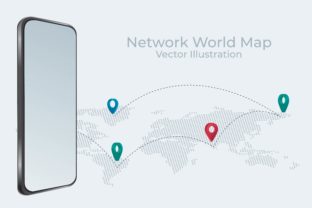
Understanding Network Mobile GPS Navigation: How It Works and Why It Matters
In today’s connected world, Network Mobile GPS Navigation has become an essential part of how we interact with our surroundings. Whether you're finding your way through a new city, tracking a delivery, or checking in at a location on social media, mobile GPS navigation plays a critical role in making these experiences seamless. But how does it really work? And why does it matter so much in our daily lives?
What Is Network Mobile GPS Navigation?
Network Mobile GPS Navigation refers to the use of global positioning system (GPS) technology through mobile networks to determine a device’s location and provide navigational guidance. While traditional GPS relies solely on satellite signals, mobile GPS navigation often combines satellite data with information from cellular networks and Wi-Fi to enhance accuracy, especially in urban environments or indoors where satellite signals may be weak.
This system allows smartphones, tablets, and other mobile devices to pinpoint their location with high precision, enabling a wide range of location-based services that we now take for granted.
How Does Network Mobile GPS Navigation Work?
At its core, GPS navigation works by receiving signals from a network of satellites orbiting the Earth. These signals allow a device to calculate its position using a method called trilateration. However, standalone GPS can sometimes be slow or inaccurate, especially in dense urban areas or inside buildings.
Network Mobile GPS Navigation improves on this by incorporating additional data from:
- Cellular towers – Devices can triangulate their position based on the strength of signals from nearby cell towers.
- Wi-Fi networks – Devices can use known Wi-Fi access points to refine their location, especially indoors.
- Assisted GPS (A-GPS) – This uses mobile networks to provide faster satellite lock and more accurate location data.
Together, these technologies allow for faster, more reliable positioning—making it possible for apps like Google Maps, Waze, and Uber to function with minimal delay and high accuracy.
The Purpose and Significance of Mobile GPS Navigation
Mobile GPS navigation serves a wide variety of purposes beyond just helping people find their way. Its significance can be seen across many areas of modern life:
- Personal Navigation – Whether walking, driving, or cycling, users can get turn-by-turn directions tailored to their mode of travel.
- Business and Logistics – Companies use GPS to track fleets, optimize delivery routes, and improve customer service through real-time updates.
- Emergency Services – GPS enables faster response times by providing accurate location data during emergencies.
- Location-Based Marketing – Retailers use geolocation to send personalized offers to users who are near their stores.
- Health and Fitness – Wearables and mobile apps track workouts, map running routes, and monitor progress over time.
Each of these applications shows how deeply integrated GPS navigation has become in both personal and professional contexts.
Real-World Examples of Mobile GPS Navigation
Let’s take a look at a few real-world examples to better understand how mobile GPS navigation impacts our lives:
- Food Delivery Services – Platforms like DoorDash and Uber Eats rely on GPS to track drivers and provide estimated delivery times to customers.
- Ride-Sharing Apps – Services like Uber and Lyft use real-time GPS data to match riders with nearby drivers and offer live route tracking.
- Travel and Tourism – Apps like Google Maps and TripAdvisor use GPS to suggest nearby attractions, restaurants, and hotels.
- Public Transportation – Real-time transit apps like Citymapper use GPS to show the location of buses and trains, helping users plan their journeys more efficiently.
These examples highlight the versatility and necessity of mobile GPS navigation in modern society.
Common Misconceptions About Mobile GPS Navigation
Despite its widespread use, there are several misconceptions about how mobile GPS navigation works:
- “GPS only works outdoors.” – While satellite signals are strongest outdoors, modern devices use Wi-Fi and cellular data to maintain location accuracy indoors as well.
- “GPS uses a lot of battery.” – While location services can drain battery life, modern devices optimize GPS use through background processing and power-saving features.
- “All location data is stored permanently.” – Most apps allow users to control what data is collected and how long it is retained. Privacy settings give users more control than many realize.
Understanding these nuances helps users make more informed decisions about how they use and manage location services on their devices.
How Mobile GPS Navigation Fits Into Everyday Life
From the moment we wake up and check the weather to the time we navigate our commute or find a nearby coffee shop, mobile GPS navigation is working behind the scenes to enhance our experiences. It’s not just about getting from point A to point B—it’s about making our lives more efficient, safe, and connected.
For example, a parent might use GPS to track a child’s school bus in real time, while a small business owner might use location data to analyze foot traffic around their store. In education, GPS-enabled field trips and outdoor learning apps help students engage with geography and environmental science in a hands-on way.
The Future of Network Mobile GPS Navigation
As technology continues to evolve, so too will the capabilities of mobile GPS navigation. Emerging trends include:
- Indoor Positioning Systems – Enhanced GPS and Bluetooth beacons are enabling accurate indoor navigation in large buildings like airports and malls.
- Augmented Reality (AR) Navigation – Apps are beginning to overlay directions on real-world views through smartphone cameras, offering a more immersive navigation experience.
- Improved Accuracy and Speed – Advances in satellite technology and AI-driven location services promise even faster and more precise positioning.
These innovations will further expand the reach and usefulness of mobile GPS navigation, making it even more integral to how we interact with the world around us.
Conclusion: Embracing the Power of Mobile GPS Navigation
Network Mobile GPS Navigation is more than just a tool for finding directions—it's a powerful technology that touches nearly every aspect of modern life. From improving transportation and safety to enabling new forms of entertainment and education, its impact is far-reaching and growing.
By understanding how it works and how it's used, we can better appreciate the value it brings to our daily routines. Whether you're a casual user or a developer building the next location-based app, mobile GPS navigation offers a world of possibilities—literally and figuratively.
As we continue to rely on smart devices and location-based services, the importance of accurate, fast, and secure mobile GPS navigation will only increase. Embracing this technology means embracing a more connected, efficient, and informed way of living.